
On this page
Thailand remains one of the easiest and most rewarding holidays for Indian travellers — beaches, food, shopping and short flights from India. This guide covers the places most first-timers ask about (Bangkok, Pattaya, Phuket, Krabi and the Phi Phi Islands), the current visa-free rule for Indians, the Thailand Digital Arrival Card, and how to carry money wisely without overpaying.
Rules and fees change. For immigration, trust official Thai government or embassy pages. For exchange rates, call us — we do not publish fixed rates on this site.
Visa-free entry for Indians (2026) and the TDAC
According to the Royal Thai Embassy in New Delhi (page updated 2 November 2026), the 30-day visa exemption for Indian ordinary passport holders for tourism purposes remains effective from 15 September 2026 until further announcement. The embassy also published an announcement on the revision of Thailand's visa exemption and VoA schemes, confirming that the 30-day scheme for Indian passport holders took effect on that date.
Earlier, many Indians were used to a longer visa-free stay. The September 2026 revision shortened the tourism exemption to 30 days for ordinary Indian passports. If you need a longer holiday, check tourist visa options on the embassy site or thaievisa.go.th before you book.
Thailand Digital Arrival Card (TDAC)
Separate from the visa exemption, Thai Immigration requires every non-Thai national to submit a free Thailand Digital Arrival Card (TDAC) online before arrival. Official guidance on the Immigration Bureau TDAC FAQ states that:
- All non-Thai nationals must submit a TDAC before entering Thailand
- Submit it within three days before arrival (including the arrival date) at https://tdac.immigration.go.th
- A new TDAC is needed for every entry
- It is free — do not pay third-party sites that claim to sell it
Complete the TDAC even if you are entering visa-free. Keep the QR code or confirmation on your phone for immigration.
Where to go: five popular stops
Below is a practical overview of the destinations Indian travellers ask about most. Times are rough guides for a first visit, not hard rules.
Bangkok — city life, temples and food (3–4 days)
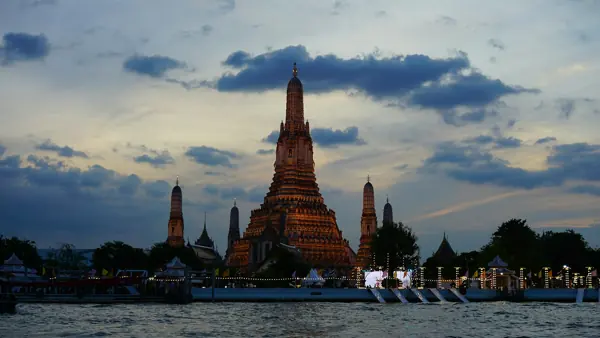
What to see and do: Grand Palace and Wat Pho, Wat Arun across the river, a Chao Phraya river boat, Chatuchak Weekend Market (if your dates match), Chinatown street food, and a rooftop or riverside evening. Shopping malls and night markets make Bangkok easy for Indian families.
How to get there: Direct and one-stop flights from major Indian cities into Suvarnabhumi (BKK) or Don Mueang (DMK). The Airport Rail Link, taxis and hotel transfers cover the city. Grab (app) is widely used for rides.
Days: Three full days cover the highlights; four if you want a day trip (Ayutthaya) or slower shopping.
Pattaya — beaches close to Bangkok (2–3 days)
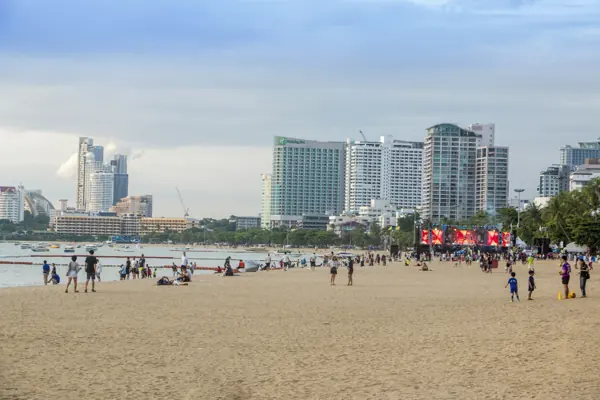
What to see and do: Beach time, walking street atmosphere (choose areas that suit your group), Sanctuary of Truth, Coral Island / Koh Larn day boats, and water sports. Many Indian groups combine Bangkok + Pattaya on a short break.
How to get there: Road from Bangkok takes roughly two to three hours by bus, minivan or private car. Some travellers fly into Bangkok and go straight to Pattaya by transfer.
Days: Two days for a beach break; three if you want island boats and a slower pace.
Phuket — Andaman beaches and islands (3–4 days)
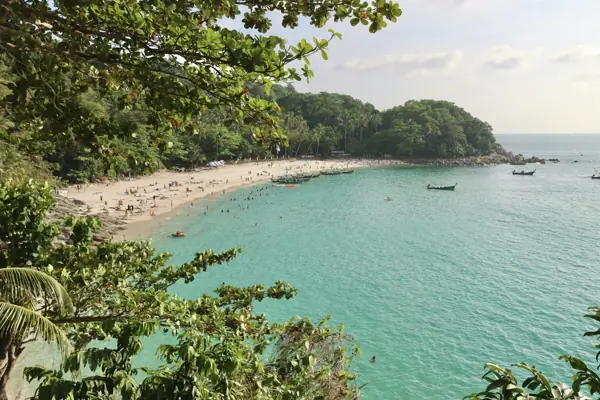
What to see and do: Patong and Kata/Karon beaches, Old Phuket Town cafés, viewpoints, and day trips to nearby islands. Phuket works well as a base for Andaman sea days.
How to get there: Fly into Phuket International Airport (HKT) from India (direct on some routes/seasons, otherwise via Bangkok). Domestic flights Bangkok–Phuket take about 1.5 hours. Taxis and shared vans serve the main beaches.
Days: Three to four days for beaches plus one island day.
Krabi — cliffs, Railay and calm beaches (2–3 days)
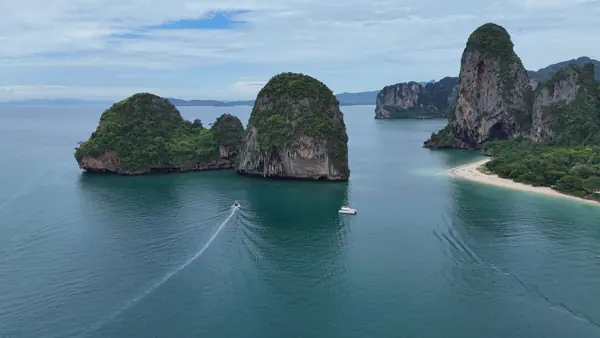
What to see and do: Ao Nang, Railay (long-tail boat from Ao Nang), Emerald Pool / Hot Springs day trips, and limestone scenery that looks very different from Phuket. Krabi is quieter than Patong and popular with couples and families.
How to get there: Fly into Krabi Airport (KBV), or take a bus/van from Phuket (about three hours). Long-tail boats link Ao Nang and Railay.
Days: Two to three days, more if you add island hopping.
Phi Phi Islands — day trip or overnight (1–2 days)
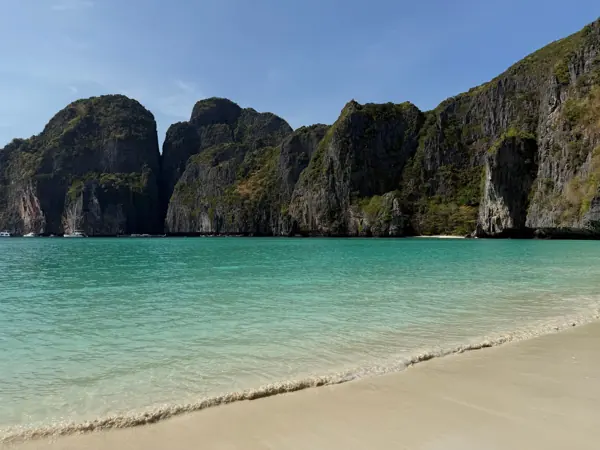
What to see and do: Maya Bay viewpoint area (access rules change — follow local guidance), snorkelling, boat tours around the archipelago, and the lively Ton Sai strip if you stay overnight. Many travellers visit Phi Phi as a day trip from Phuket or Krabi.
How to get there: Ferries and speedboats from Phuket and Krabi / Ao Nang. Weather can cancel boats in rough seas — keep a buffer day in your plan.
Days: One long day trip, or one night on the island if you prefer sunrise/sunset without rushing the ferry.
Sample trip lengths
- 7–8 days: Bangkok (3) + Pattaya (2) + buffer / shopping day, or Bangkok (3) + Phuket (4).
- 10–12 days: Bangkok (3) + Phuket (3) + Krabi & Phi Phi (3–4), with travel days between.
- Under the 30-day visa exemption: Plenty of room for a relaxed circuit, but leave buffer for flight delays and do not plan to overstay.
Book domestic flights and popular island boats early in peak Indian holiday periods (Diwali, Christmas–New Year, summer school holidays).
Carry a little Thai baht for arrival
Landing with some Thai baht (THB) cash makes the first few hours easier. You may need cash for an airport taxi or transfer, a local SIM / eSIM top-up desk, water, snacks or a tip. Airport counters are convenient but often not the best place to change your whole trip budget.
A practical approach many Indian travellers use:
- Buy a modest amount of THB in India before you fly (enough for arrival day)
- Carry the rest of your spending money in a form that exchanges well in Thailand (see USD below)
- Keep a card as backup, not as your only option
We will not quote amounts or rates here — they change. Message OnSpot Forex for today's THB notes and what documents you should bring.
Why USD works well in Thailand
The US dollar is one of the best currencies to carry into Thailand. Large, reputable money changers across Bangkok and the tourist towns (including well-known names such as SuperRich) publicly post rates by denomination. In practice:
- $50 and $100 notes usually get a better baht rate than small notes
- Clean, undamaged, newer-series notes are preferred; torn, heavily written-on or very old notes may be refused or taken at a weaker rate
- Changing USD in town is often smarter than changing your entire budget at the airport
So a common India → Thailand money plan is: a little THB for landing + clean USD for the bulk of cash spending, exchanged after you settle into Bangkok or your beach town.
Buy your USD (and THB) at competitive rates in Ahmedabad before you leave — see our currency exchange service. Bring passport and ticket / visa documents as required.
Cash, cards and forex cards — a balanced view
Forex cards are useful and OnSpot can help you arrange one. For Thailand specifically, relying on a card alone is often not ideal. Here is a factual, balanced picture.
ATM fees add up
Thai bank ATMs charge a flat fee on each withdrawal made with a foreign-issued card. Fee schedules published by major Thai banks in 2025–2026 commonly show around 250 Thai baht per withdrawal for Visa / UnionPay and about 350 Thai baht for Mastercard at many machines (your own bank may add further charges). Figures move when banks update tariffs, so treat these as typical recent levels, not a permanent quote. Because the fee is flat, many small withdrawals cost more than fewer larger ones — and cash from an Indian money changer can still work out cleaner for day-to-day spending.
Cash is still king in many places
Card acceptance is strong in malls, hotels and larger restaurants. It is weaker at street food stalls, floating markets, island piers, long-tail boats, tuk-tuks and small shops. On Phi Phi, Railay and similar spots, cash keeps things simple.
Cards still have a role
A forex card or international debit/credit card is a good backup for hotels, bigger purchases and emergencies. Watch for cross-currency conversion prompts at ATMs (choose local currency / THB when asked), and be aware that load, reload or ATM-related charges can apply depending on the product. We explain options in plain language at our branch — see forex cards in Ahmedabad.
Bottom line: the mix that works for most Indian trips to Thailand is a little THB + clean USD cash for daily spend, with a card as backup — not cash-only and not card-only.
Get THB and USD at OnSpot Forex, Satellite
Before you fly, buy Thai baht and US dollars at OnSpot Currency Exchange in Satellite, Ahmedabad. We aim for competitive rates and clear guidance on documents.
- Address: 122, First Floor, Titanium City Center Mall, Near Sachin Tower, Satellite, Ahmedabad 380015
- Phone / WhatsApp: +91 87804 44705
- Hours: Monday–Saturday 10:30 am – 7:00 pm · Sunday closed
Typically bring your passport and travel ticket (and any visa papers if you are not travelling visa-free). Requirements can vary by amount and service — contact us before you visit so we can confirm. Explore all forex services or jump straight to buy / sell foreign currency.
Frequently asked questions
Do Indians need a visa for Thailand in 2026?
As of November 2026, the Royal Thai Embassy in New Delhi states that Indian ordinary passport holders may enter Thailand visa-free for tourism for up to 30 days under the revised exemption scheme that took effect on 15 September 2026. Always re-check the embassy page before you travel, because rules can change.
Is the Thailand Digital Arrival Card (TDAC) mandatory?
Yes. Thai Immigration requires all non-Thai nationals to submit the free Thailand Digital Arrival Card online at tdac.immigration.go.th within three days before arrival (including the arrival date). You need a new TDAC for every entry.
How much Thai baht should I carry from India?
Carry a modest amount of Thai baht (THB) for arrival needs such as a taxi, a local SIM and snacks. Exchange the rest of your trip money smartly — many travellers carry clean USD notes and change them in Thailand at good local rates. Call OnSpot Forex for today's THB and USD availability.
Is USD useful in Thailand?
Yes. US dollars are widely exchanged across Thailand. Money changers such as SuperRich often quote better rates for larger, clean USD notes ($50 and $100) than for small or worn notes. Avoid quoting rates online — they move daily.
Should I take only a forex card to Thailand?
A forex card is a useful backup, but cash still matters in Thailand. Street markets, island boats, tuk-tuks and many small vendors prefer cash. Thai ATMs also charge a flat fee on each foreign-card withdrawal. A practical mix is a little THB, clean USD cash, and a card as backup.
Where can I buy THB and USD in Ahmedabad?
At OnSpot Currency Exchange, 122 First Floor, Titanium City Center Mall, Satellite, Ahmedabad 380015. Bring your passport and travel documents as required. Call or WhatsApp +91 87804 44705 for today's rates. Open Monday to Saturday, 10:30 am to 7:00 pm.
This guide is for general travel-money information. Immigration rules come from official Thai sources linked above and may change. Exchange rates are never fixed on this website — please call or WhatsApp for today's rate.